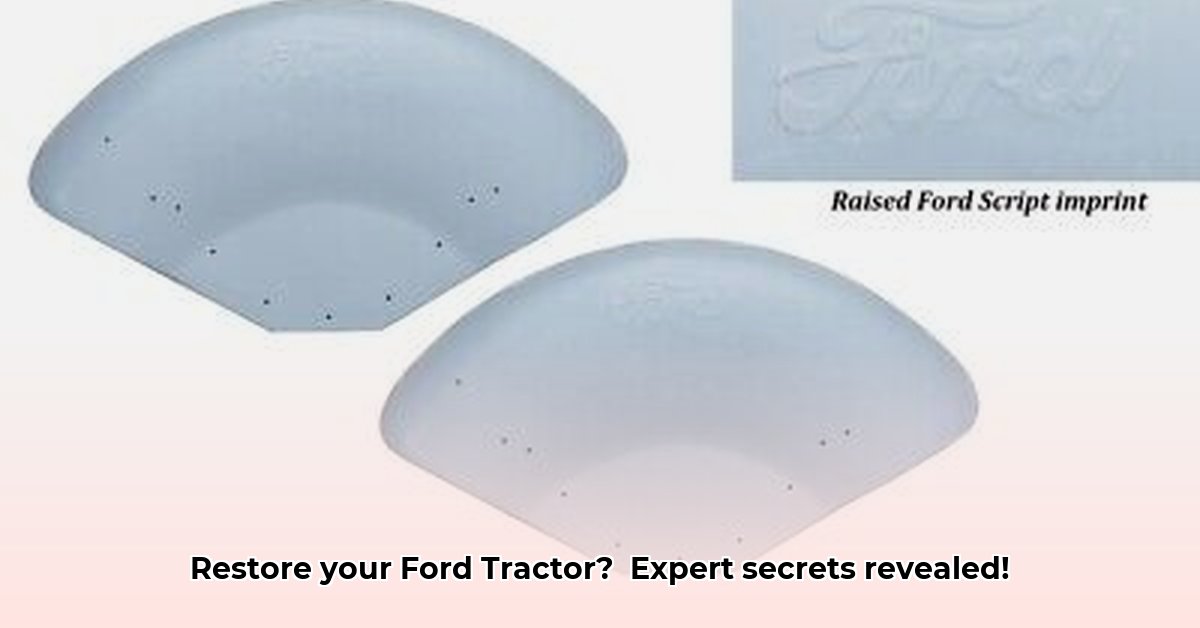
Restoring your Ford tractor's iconic script lettering adds significant historical accuracy and aesthetic value. This guide provides a detailed comparison of four restoration methods, empowering you to choose the best approach based on your skills and budget. Whether you're a seasoned restorer or a first-timer, we'll equip you with the knowledge to achieve a professional-looking finish. For more Ford tractor restoration resources, see this helpful site.
Revitalizing Your Tractor's Lettering: Four Methods Compared
Four primary methods exist for restoring Ford tractor script: decals, hand-painting, roller application, and stencils. Each presents a unique balance of ease, cost, and aesthetic result.
1. Decals: The Quick and Easy Option
Decals offer a fast, affordable solution, particularly appealing to beginners. Pre-made decals are widely available online and at farm supply stores. However, they might compromise authenticity and longevity compared to painted lettering.
Materials: High-quality outdoor decals, application fluid, soft lint-free cloth.
Step-by-Step:
- Thoroughly clean the application area. Remove all dirt, grease, and old paint.
- Carefully position the decal. Accurate placement is crucial.
- Smooth out air bubbles, working from the center outwards.
- Let the decal dry completely according to manufacturer instructions.
Pros: Simple, inexpensive, readily available. Cons: May not look authentic, less durable than paint, potential for fading or peeling.
2. Hand-Painting: Achieving Authentic Detail
Hand-painting delivers the most authentic aesthetic, but demands skill and patience. This method allows for precise control and superior durability.
Materials: Fine-tipped brushes (various sizes), high-quality enamel paint (exterior grade), masking tape (optional), mahlstick (recommended for steadiness).
Step-by-Step:
- Thoroughly clean and prepare the surface. A primer is often beneficial for better paint adhesion. (Consider using a lead-free primer.)
- Apply a base coat (if needed) in the correct color, letting it fully dry.
- Carefully paint the script, using light, controlled strokes. Multiple thin coats are better than one thick coat.
- Allow each coat to dry completely.
- Apply a clear protective coat (sealant) for added durability and weather resistance.
Pros: Authentic look, highly durable, superior detail control. Cons: Time-consuming, requires artistic skill.
3. Roller Application: Balancing Speed and Quality
A foam roller offers a faster alternative to hand-painting while still delivering a respectable result. It's a good middle ground for those seeking a balance between ease and quality.
Materials: High-density foam roller (short fibers), high-quality enamel paint, masking tape.
Step-by-Step:
- Thoroughly clean and prepare the surface, similar to hand-painting.
- Apply a base coat if necessary and allow to dry.
- Apply paint using light, even strokes, avoiding excessive pressure.
- Use masking tape to protect surrounding areas.
- Apply multiple thin coats for even coverage.
- Apply a clear protective coat.
Pros: Faster than hand-painting, relatively inexpensive. Cons: Achieving perfectly crisp lines can be challenging.
4. Stencils: A Less Reliable Option
Stencils, while seemingly simple, often result in uneven paint application and bleeding, leading to a less professional finish. We generally discourage this method for restoring tractor lettering.
Materials: Durable stencil (vinyl or frisket paper), masking tape, paint.
Step-by-Step:
- Secure the stencil firmly with masking tape.
- Apply paint carefully, avoiding excessive amounts.
- Let it dry completely before removing the stencil.
- Touch up imperfections as needed.
Pros: Potentially inexpensive. Cons: High risk of uneven paint application and bleeding, often resulting in a poor finish.
Choosing the Right Method: A Decision Matrix
The optimal restoration method depends on your skill level, budget, and desired outcome. The following table helps guide your decision:
| Skill Level | Budget | Desired Outcome | Recommended Method |
|---|---|---|---|
| Beginner | Low | Acceptable Look | Decals |
| Intermediate | Medium | Good Appearance | Roller Application |
| Advanced | High | Perfect Look | Hand-Painting |
Advanced Techniques: Mastering the Details
- Color Matching: Precise color matching is crucial. Use paint samples and consider color mixing for an exact match.
- Surface Preparation: Meticulous surface cleaning and priming ensure optimal paint adhesion and longevity.
- Repairing Damage: Address any significant damage (scratches, chips) before painting using an appropriate auto body filler.
- Paint Selection: Use high-quality, exterior-grade enamel paints for optimal durability. Lead-free options are strongly recommended.
Conclusion: Restore Your Ford's Legacy
Restoring your Ford tractor's script lettering is a rewarding project that enhances its historical significance. By carefully considering the methods outlined in this guide and applying the advanced techniques, you can achieve a stunning and durable finish. Share your restoration journey with fellow enthusiasts!
Resources
- Yesterday's Tractors Forum (example- replace with relevant forums and resources)